Project Benefits
Projects like this bring employment benefits to the communities in which we operate, put downward pressure on local electricity prices for kiwi families, as well as help economies decarbonise and therefore increase their international export competitiveness.
New Zealand’s Energy System Resilience
New solar electricity generation at this scale enhances the flexibility and resilience of our overall energy system by complimenting existing hydro and wind generation, with each of these renewable energy sources benefiting from different weather conditions.

If there were enough solar farms like this in New Zealand we could generate a lot of electricity during the drier summer and autumn months. This would mean that we could save the water in our hydro lakes until it’s really needed in winter when our power usage increases for heating. If we still have enough water in our hydro lakes at the start of winter it means that we don’t have to burn expensive (and polluting) gas or coal to get through the cold months. Using our hydro lakes more in winter means power prices don’t skyrocket for kiwi families which can happen when we burn fossil fuels.
Employment and the Local Economy
Please register your interest or join our mailing list for upcoming employment and contractor opportunities during construction. You can also contact us here.
It will take approximately two years for the solar farm to be constructed. There will be alot of jobs generated during this period.
Employment opportunities include civil works, mechanical installation, electrical works, high voltage grid connection, commissioning, fence building and tree planting, with job numbers on projects like this reaching up to 250 during the peak of construction.
Once the solar farm is operational there will be 4 to 6 full time equivalent employees on site. In addition to this permanent workforce, there will be ongoing demand for contracted seasonal services which may include vegetation maintenance, panel cleaning, electrical testing, equipment servicing and civil maintenance.
Offering work to local people is a priority for FRV. Wherever possible we will use local services and labour to bring benefits to the local economy.
These benefits extend through the local supply chain to:

Earthworks, Builders and Electricians

Accomodation

Cafes, Pubs, Catering, Supermarkets

Landscaping, Tool and Equipment Suppliers
Contributing to Local Agriculture

I would absolutely recommend this sort of opportunity to other farmers where it arises

Solar farms provide local farmers with an opportunity to safeguard their farming business against and the uncertainty of weather events and commodity prices.
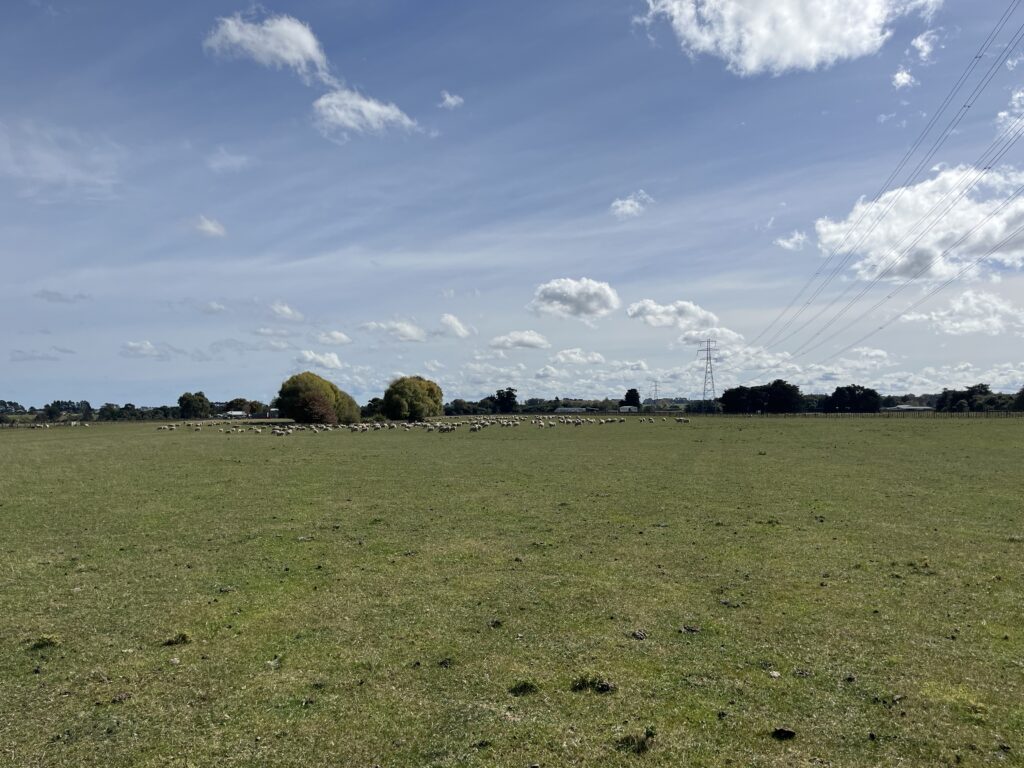
Sheep grazing on solar farms has mutual benefits with the solar panels offering shelter to the animals and the sheep helping to manage grass growth. This dual use of land also means that the project participates in the local agricultural sector, requiring the same goods and services that any other sheep farm would require.
FRV has sheep grazing on many solar farms around the world, highlighting the economic feasibility and practicality of doing this. The Joint Venture solar farm in Lauriston, Canterbury built by FRV and Genesis Energy has sheep currently grazing in and around the solar panels, demonstrating that this stacks up in New Zealand too.
As the Rangitīkei Solar Farm progresses, FRV will be working with the landowners and local community to make it as feasible as possible to graze sheep at the project site given the multiple benefits.
For more information on the compatibility of solar and agriculture, click here.
Environmental Benefits
New Zealand’s energy demand could increase by up to 50% by 2050. Solar farms like this generate clean, zero-emissions electricity to help meet that growing demand.
The solar panels are mounted on steel structures supported by piles driven into the ground, making them a relatively low-impact form of development. At the end of the project’s life, the equipment can be removed and the majority of materials recycled, allowing the land to be returned to its original state.
The solar farm could generate around
400,000 MWh of electricity
Equivalent to:

195,000 tonnes CO2
avoided every year compared to burning gas for electricity

55,000 Kiwi homes
powered by renewable, clean energy

250,000 electric vehicles
zipping around the
country